.webp) centrallinkapp.com
centrallinkapp.comHow to Master Escape from Tarkov - The Complete Beginner-to-Advanced Guide
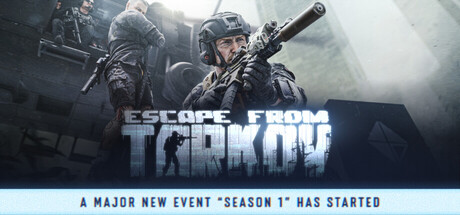
Escape from Tarkov is a hardcore tactical first-person shooter built around high-risk raids, realistic combat, resource management, and persistent progression. Unlike conventional shooters where a failed match usually means nothing more than returning to the lobby, Tarkov makes every raid meaningful. The equipment you bring can be lost, valuable items must be extracted successfully, and even a single poorly judged encounter can end a promising run.
The game takes place in the fictional Norvinsk region, an area devastated by conflict between private military companies, local forces, and other factions. Players enter dangerous locations as either USEC or BEAR operators, searching for equipment, completing objectives, fighting AI-controlled Scavs, and confronting other players.
What makes Escape from Tarkov difficult is the way its systems interact. Gunfights are important, but survival depends just as much on positioning, sound awareness, ammunition selection, inventory management, map knowledge, and knowing when not to fight.
This guide explains the fundamentals of Tarkov and provides a practical progression path for players who want to survive more raids and gradually become more confident in the game's demanding environment.
Understanding the Core Raid Loop
Everything in Escape from Tarkov revolves around raids.
Before entering a raid, you choose your equipment, ammunition, medical supplies, and other items. You then enter a map with a specific objective or collection of goals.
During the raid, you can search containers, collect valuable items, complete tasks, engage enemies, and explore the environment. Your ultimate objective is to reach an extraction point before the raid timer expires.
The important part is that extracting successfully allows you to bring your surviving loot back to your stash.
Dying is different.
If you die during a raid, most of the equipment you carried can be lost, while items found during the raid may also fail to become useful if you cannot successfully extract with them.
This creates the central Tarkov decision:
Is the potential reward worth the risk of continuing?
Learning to answer that question is one of the most important skills in the game.
Start With the Map, Not the Gun
New players often spend too much time thinking about weapons and not enough time learning maps.
A powerful weapon cannot compensate for poor positioning.
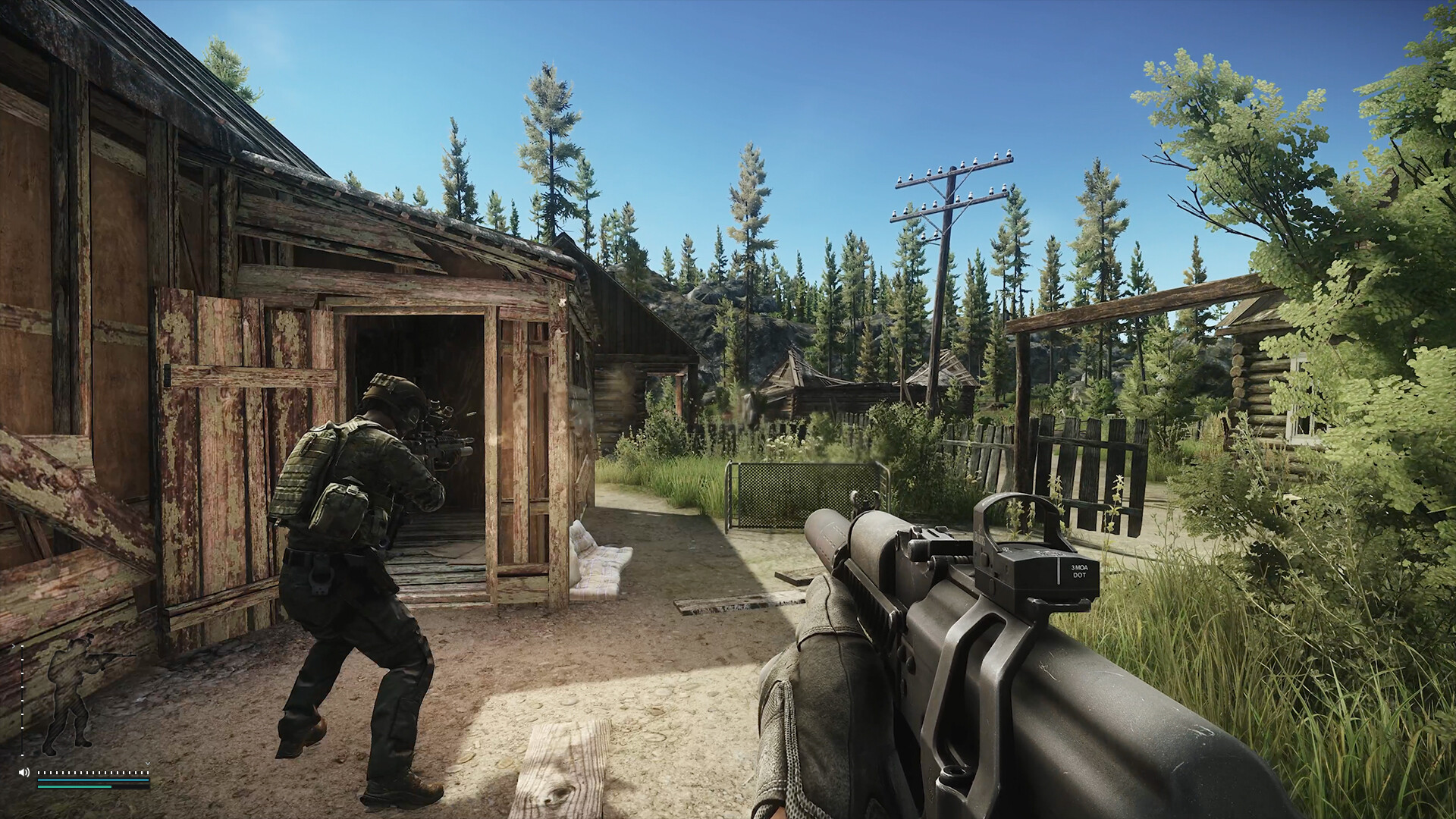
Every map has recognizable landmarks, major routes, buildings, extraction points, dangerous areas, and locations where players frequently travel. Understanding these features allows you to predict where threats may come from.
Learn One Map at a Time
Trying to memorize every Tarkov map simultaneously can be overwhelming.
Choose one location and learn it thoroughly.
Start by learning:
- Your possible spawn areas
- Extraction locations
- Major landmarks
- Common routes
- Important buildings
- High-value loot areas
- Areas where players frequently fight
- Useful fallback positions
Once you know where you are, many other decisions become easier.
You can identify where you spawned, estimate where other players may be moving, and plan your route toward extraction.
Learn the Extractions First
Extraction knowledge should be one of your earliest priorities.
A raid can go extremely well, but none of your loot matters if you do not know how to leave the map.
Before entering an unfamiliar location, learn which extraction points are available to your character and what conditions they require.
Then build your route around them.
Choosing Your Equipment
Gear selection in Tarkov is more complicated than simply choosing the most expensive equipment available.
A good loadout should match your objective, budget, map, and experience.
Taking your most valuable equipment into every raid is rarely necessary, especially when you are still learning.
Build Practical Loadouts
A practical loadout should provide the essentials without putting your entire stash at risk.
Think about:
- Weapon
- Ammunition
- Armor
- Head protection
- Medical supplies
- Food and hydration when needed
- Backpack
- Secure container
- Spare magazines
- Essential utility items
The exact combination depends on your objective.
A loot-focused raid may require more inventory space, while a task-oriented raid may prioritize mobility and ammunition.
Avoid Gear Fear
New players often fall into two opposite habits.
Some bring expensive gear into every raid without understanding how to use it.
Others collect valuable equipment but refuse to use it, leaving their stash full of weapons that never help them progress.
Gear exists to be used.
If a weapon or armor is appropriate for your current objective, using it can be more valuable than keeping it permanently stored.
Understanding Ammunition
One of the biggest lessons in Escape from Tarkov is that the weapon itself is only part of the equation.
Ammunition matters enormously.
Different ammunition types can behave differently against armor and unarmored targets. A weapon that feels weak with poor ammunition can become significantly more effective with appropriate rounds.
Prioritize Ammunition Knowledge
Before entering a raid, understand what ammunition you are carrying.
Avoid mixing incompatible or poorly understood ammunition simply because it is available.
For beginners, it is useful to learn which rounds are generally intended for:
- Armored targets
- Unarmored targets
- Longer-range engagements
- Close-range encounters
- Specific weapon platforms
As you progress, ammunition knowledge becomes one of the most important parts of building effective loadouts.
Learning Tarkov's Health and Medical Systems
Escape from Tarkov treats injuries differently from many traditional shooters.
Damage can affect different parts of the body, and injuries can create additional problems during a raid.
A player who survives a firefight may still be in serious danger if they do not treat their injuries correctly.
Carry Essential Medical Supplies
Your medical equipment should match the expected danger of the raid.
At minimum, understand how to deal with the major injury states you are likely to encounter.
Do not wait until you are critically injured before thinking about medical supplies.
Check Your Condition After Combat
Surviving a firefight does not necessarily mean you are safe.
After an engagement, take a moment to assess your condition.
Check for injuries, bleeding, reduced mobility, damaged body parts, and other effects that could make another fight dangerous.
A short pause to recover can prevent a second encounter from becoming fatal.
Sound Is One of Your Most Important Weapons
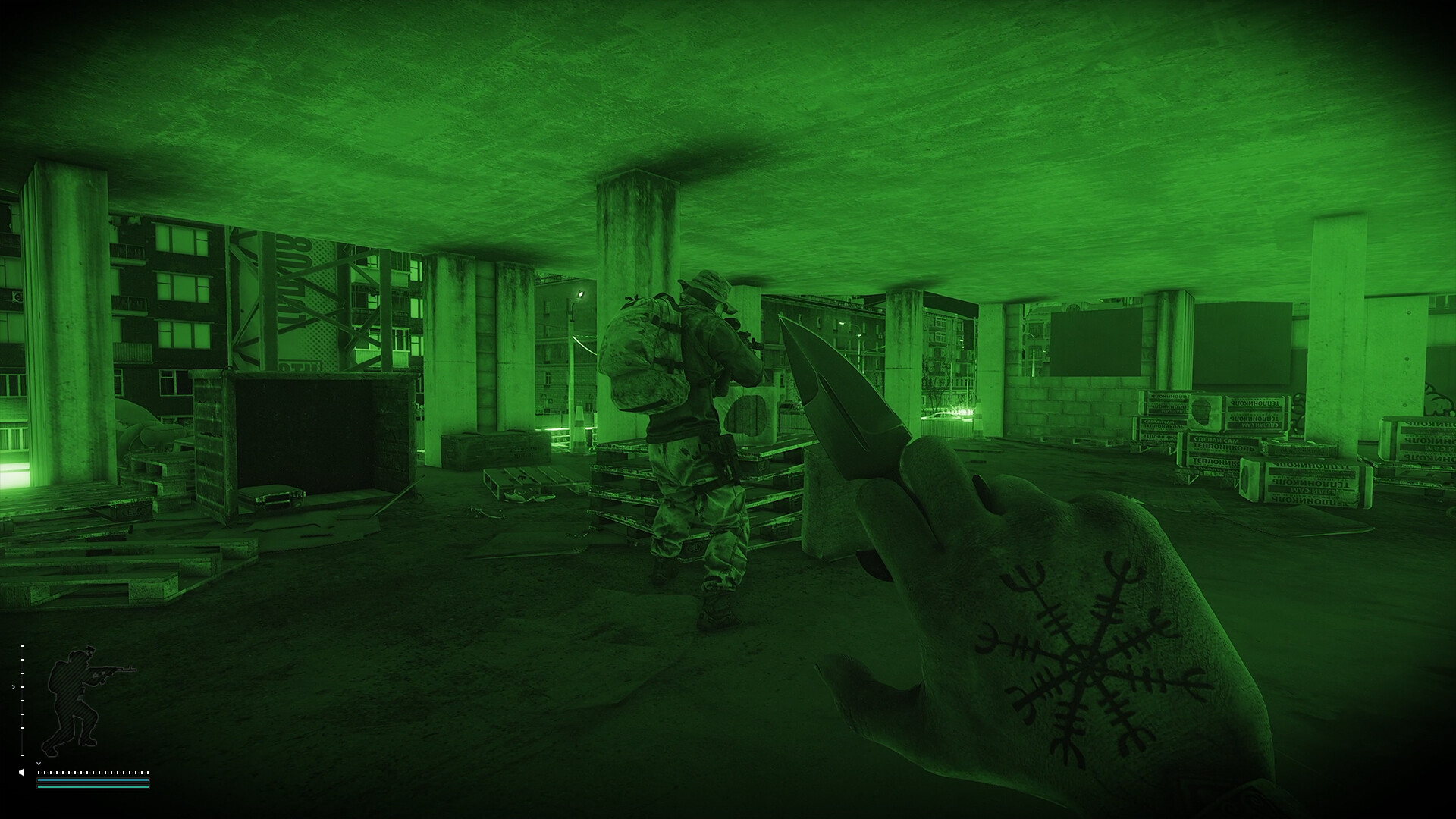
Escape from Tarkov places enormous importance on sound.
Footsteps, doors, gunfire, movement, and other environmental noises can provide information about nearby players.
Sometimes hearing an enemy is more valuable than seeing them.
Stop Moving When Necessary
Constant movement creates noise.
If you suspect another player is nearby, stopping briefly can help you identify their position.
Listen for:
- Footsteps
- Running
- Crouched movement
- Reloading
- Weapon handling
- Doors opening
- Distant gunfire
- Environmental movement
Information gathered through sound can help you decide whether to engage, reposition, or avoid the encounter.
Do Not Give Away Your Position
Unnecessary movement can reveal you.
Running through an unknown area may feel efficient, but it can also announce your location to anyone nearby.
Move quickly when the situation requires it, but slow down when approaching areas where an enemy may be waiting.
Learning to Fight Other Players
PvP combat in Tarkov is often decided before the first bullet is fired.
Positioning, information, cover, and surprise can matter more than raw reaction speed.
Use Cover Properly
Cover protects you from enemy fire.
Concealment only makes you harder to see.
This distinction matters.
A bush may hide your position, but it does not necessarily stop bullets. A solid wall or suitable structure can provide actual protection.
When moving through dangerous areas, think about where you can retreat if a fight begins.
Do Not Stand in the Same Position
If you fire at an enemy and remain exposed in exactly the same location, you give them an easy target.
After an engagement begins, consider changing your position.
Even a small reposition can make it harder for the enemy to predict where you will appear next.
Learning When Not to Fight
Avoiding combat is one of the most important advanced skills in Tarkov.
You do not need to eliminate every player you encounter.
If you are carrying valuable loot, completing a task, or approaching extraction, fighting may create more risk than reward.
Consider:
- What do I gain from this fight?
- What could I lose?
- Do I know how many enemies are nearby?
- Do I have enough ammunition?
- Am I injured?
- Where is my extraction?
- Can I disengage safely?
Sometimes the smartest play is simply moving away.
Fighting Scavs
Scavs are a major part of Tarkov's environment.
They can appear in predictable areas and create danger even when no player is nearby.
For new players, Scavs can also be useful for learning the basics of combat.
Use Scavs for Practice
Early raids can help you learn how weapons behave against AI opponents.
Practice:
- Aiming
- Taking cover
- Managing recoil
- Identifying enemy positions
- Healing after combat
- Looting quickly
- Repositioning
However, never assume that fighting a Scav is completely safe.
Gunfire can attract other enemies, including players.
A successful Scav engagement can create a new problem if it exposes your location.
Understanding Scav Runs
Tarkov provides a separate way to enter raids as a Scav.
Scav runs can be extremely useful for learning maps and collecting equipment without risking your main PMC loadout in the same way.
Because the starting equipment is generally provided for the run, Scav raids can also help new players build up their stash.
Use Scav Runs to Learn
A Scav run is a good opportunity to explore areas that you do not yet understand.
You can practice navigation, identify extraction points, learn where loot appears, and become familiar with the environment.
It is also a useful way to experiment with equipment you might not normally purchase.
Completing Tasks and Quests
Tasks are an important part of progression.
They can send you to specific maps, require particular items, or ask you to complete objectives under dangerous conditions.
Following tasks gives your raids a clearer purpose.
Instead of entering a map with no objective, you have a reason to move toward a specific location.
Prepare Before a Task Raid
Read the objective carefully before entering.
If you need to visit a particular location, learn where it is before the raid.
If you need to survive and extract, do not treat the task as complete until you are safely out.
Task progression often requires multiple attempts, so do not become discouraged by failure.
Managing Your Stash
Your stash becomes increasingly important as you progress.
It contains your weapons, armor, ammunition, medical supplies, quest items, and other resources.
Poor organization can make preparation unnecessarily slow.
Keep Your Stash Organized
Separate different categories of items.
For example:
- Weapons
- Armor
- Ammunition
- Medical supplies
- Food
- Task items
- Valuable loot
- Utility equipment
Organization becomes increasingly important as your collection grows.
It also makes it easier to understand what you actually have available before purchasing new equipment.
Understanding the Economy
Tarkov has a strong economic layer.
Money allows you to purchase equipment, supplies, and other useful items. Loot can be sold or used for progression.
This means every item has an opportunity cost.
Selling something may provide immediate money, while keeping it could help with a future objective.
Do Not Sell Everything Immediately
Before selling a potentially useful item, determine whether it could have another purpose.
Some items may be required for tasks or upgrades.
Learning which items are valuable for progression will prevent you from repeatedly buying back things you previously sold.
Improving Your Survival Rate
A higher survival rate does not come from winning every gunfight.
It comes from making fewer unnecessary mistakes.
Start by identifying why your raids fail.
If you frequently die while crossing open areas, improve your route selection.
If you die after winning fights, work on post-combat awareness.
If you constantly run out of supplies, adjust your loadouts.
If you extract with almost nothing, improve your map knowledge and loot routes.
The goal is to turn repeated deaths into specific lessons.
Developing Better Raid Habits
A strong Tarkov player develops consistent habits.
Before a raid, check the objective, equipment, map, and extraction plan.
During the raid, constantly gather information.
Ask yourself where enemies could be, where you can take cover, and whether your current route remains safe.
After every fight, reassess the situation.
Before extracting, consider whether continuing deeper into the map is actually worthwhile.
These habits reduce impulsive decisions.
Advanced Positioning and Map Awareness
Once you become comfortable with basic combat, start thinking about how players move through the map.
Players generally have objectives.
They may be moving toward loot, tasks, extraction points, or other important locations.
Understanding these routes allows you to predict possible encounters.
Think About Timing
Where you are on the map matters, but when you are there also matters.
A location may be quiet at one moment and extremely dangerous shortly afterward.
Gunfire can indicate that another group is nearby. A recently opened door or looted container may suggest that someone has passed through recently.
The environment can provide clues about what happened before you arrived.
The Importance of Patience
Tarkov rewards patience.
You do not need to rush toward every sound.
Sometimes waiting gives you more information.
If you hear multiple players fighting, you can observe the situation instead of immediately joining it. If you suspect another player is approaching, remaining hidden may give you a better opportunity to move afterward.
Patience does not mean playing slowly all the time.
It means knowing when speed creates an advantage and when it creates unnecessary danger.
Building a Long-Term Improvement Routine
Improving at Escape from Tarkov can feel difficult because many different skills need to develop simultaneously.
A structured routine helps.
Focus on One Skill at a Time
For several raids, focus specifically on map navigation.
Then concentrate on sound awareness.
After that, practice combat positioning.
Later, focus on efficient looting and extraction routes.
Trying to improve everything simultaneously makes it difficult to identify what is actually working.
Review Your Deaths
When you die, ask what happened.
Do not simply think, "I lost that fight."
Break the situation down.
Did you expose yourself unnecessarily?
Did you move too loudly?
Did you fail to check a likely position?
Did you stay too long after getting valuable loot?
Did you misunderstand the enemy's location?
Every death can provide useful information if you analyze the sequence rather than focusing only on the outcome.
Common Beginner Mistakes
Several mistakes appear repeatedly among new Tarkov players.
The first is running everywhere without considering sound.
The second is entering raids without knowing extraction points.
The third is using expensive equipment without understanding the weapon or ammunition.
The fourth is fighting every enemy.
The fifth is staying in dangerous locations for too long after obtaining valuable loot.
Another common mistake is ignoring the importance of map knowledge. Players often blame their aim when the real problem is entering an unfavorable position.
Improving your route selection can sometimes have a greater effect on survival than improving your shooting accuracy.
A Reliable Raid Formula
A simple raid formula can help new players develop consistency.
Prepare → Enter → Navigate → Gather information → Complete your objective → Loot selectively → Reassess → Extract.
The key word is reassess.
Your original plan may become irrelevant after the raid starts.
You might become injured. You might find valuable loot. You might hear a nearby firefight. You might discover that your intended route is occupied.
Adaptation is essential.
Conclusion
Escape from Tarkov is challenging because almost every system is connected to risk. Weapons, ammunition, armor, medical supplies, maps, sound, loot, tasks, and extraction all influence whether a raid becomes a success or a costly failure.
New players should resist the temptation to master everything immediately. Start with one map, learn the extraction points, build practical loadouts, understand ammunition, and develop reliable movement habits.
As your map knowledge improves, you will begin to recognize dangerous routes, valuable locations, common player movements, and opportunities to disengage before a fight becomes unavoidable.
The ultimate skill in Escape from Tarkov is not simply winning gunfights. It is making better decisions under uncertainty. When you know when to move, when to wait, when to fight, and when to extract, the game's brutal survival loop becomes far more manageable.