.webp)








ROUTINE is a retro-futuristic sci-fi horror game set on an abandoned lunar base where every corridor hides uncertainty, every noise can be a threat, and every decision can determine whether you survive another minute. Unlike traditional horror games that rely purely on jump scares, ROUTINE emphasizes tension, procedural encounters, environmental design, and resource scarcity. This “how to” guide is built to help you navigate the entire game experience—from the first cautious steps on the moonbase to the late-game confrontations with highly intelligent robotic entities.
Through ten chronological sections, you will learn how to approach movement, stealth, exploration, survival strategy, environmental puzzles, encounters, resource management, and final-stage decision-making. Because ROUTINE is deeply atmospheric and intentionally disorienting, the key to mastering it is not brute force—it is discipline, awareness, and planning.
1. How to Begin Your Mission on the Lunar Base (Initial Phase)
The earliest moments of ROUTINE establish the tone for the entire game. When you first arrive on the base, your objective is not to fight or explore aggressively; it is simply to understand your surroundings. ROUTINE’s world is filled with audio cues, lighting clues, and environmental storytelling that help you understand danger before you even see it.
During the initial phase, movement should always be deliberate. Familiarize yourself with the layout: sleeping quarters, maintenance hallways, terminals, and observation bays. Each area introduces mechanics that will become important later, such as hiding spots, power nodes, and routes with alternative exits.
H3 – Early Priorities
- Learn the feel of the lunar base’s ambient audio
- Map mentally the first two sections of the facility
- Identify safe retreat points
H4 – Common Mistake
Never run through early corridors; sprinting creates noise that attracts patrolling robots even before you have the tools to defend yourself.

2. How to Understand the Robotics Threat (Awareness Phase)
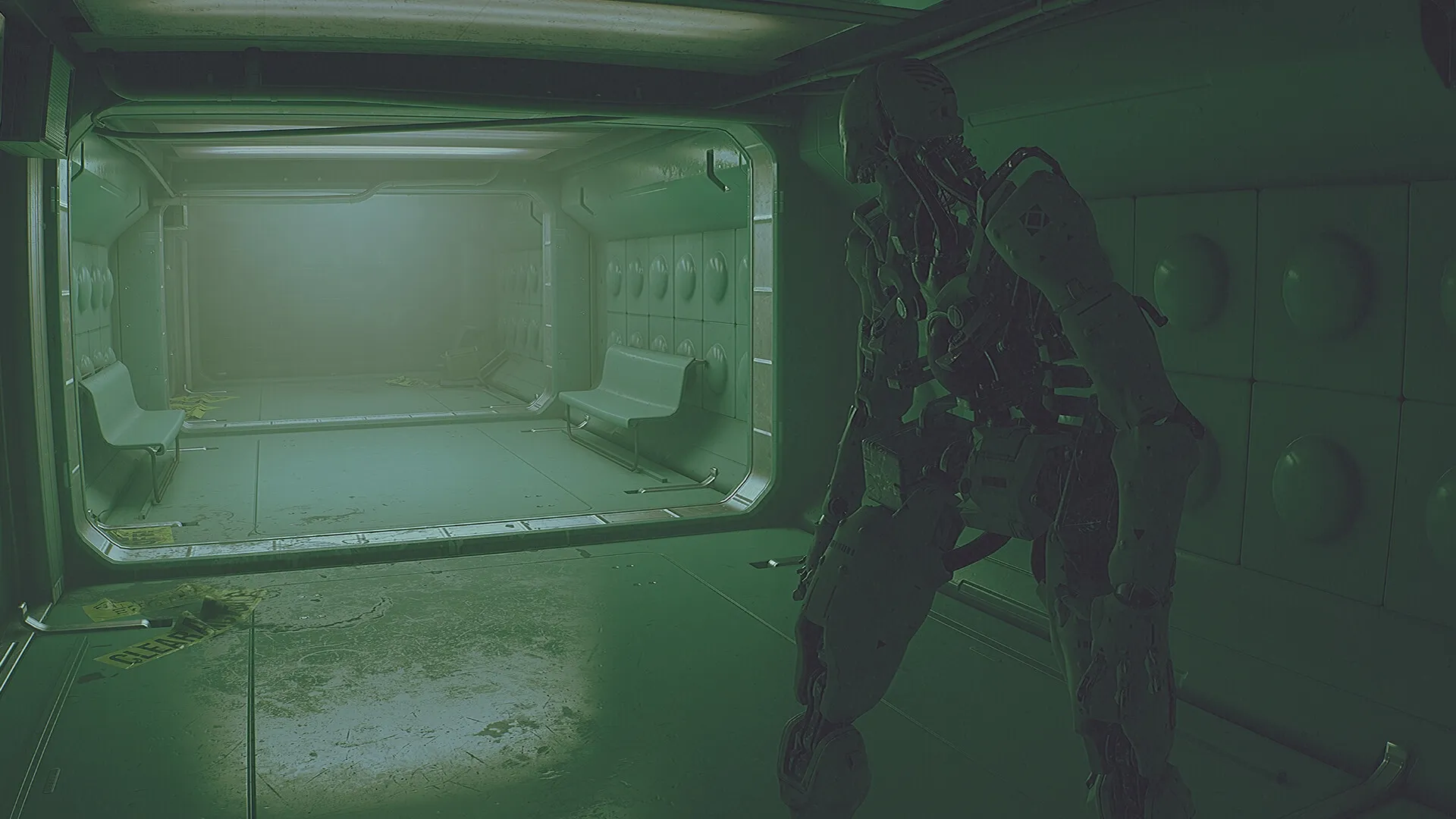
ROUTINE’s robotic enemies are not simple scripted monsters—they react to stimuli, track noise, and often approach silently. Learning how they behave is the most important skill in the early hours. Observation becomes your strongest weapon long before you find any gear.
You will encounter different models of robots, each with unique movement patterns. Some move slowly and deliberately, scanning the environment. Others dart through the hallways unpredictably. Spend time watching them from safe cover to understand how they respond to sound, light, or movement.
H3 – Behavioral Clues
- Rapid head turns indicate scanning
- Low pulsing hum means alert mode
- Clicking joints suggest pursuit nearby
H4 – What to Avoid
Never assume a robot has left just because you can’t hear it anymore; many units stop moving to listen for your footsteps.
3. How to Explore Safely Without Getting Caught (Stealth Phase)
Exploration is both necessary and dangerous. ROUTINE rewards players who explore every room, crawlspace, and vent, but reckless exploration almost always ends in disaster. Keep your flashlight use minimal—light is useful, but also visible.
Every section of the lunar base contains alternative routes. Some paths lead to loot, others to shortcuts, and others to danger. Always test a room before entering: lean, peek, or move slowly to check corners. The game’s systems create tension through unpredictability, but your approach can reduce many risks.
H3 – Stealth Techniques
- Move slowly to minimize noise
- Toggle light only when needed
- Use vents and side passages
H4 – Tools of Survival
Environmental objects such as crates, timing panels, and abandoned consoles can act as cover or noise distractions if used creatively.
4. How to Manage Your Resources Effectively (Survival Phase)
ROUTINE offers few resources. Batteries, repair tools, and utility items are scarce. Hoarding is essential, but efficient spending is even more important. Wasting batteries on unnecessary flashlight usage will leave you blind when you need visibility most.
Focus on collecting items from maintenance rooms and storage closets. Many may seem insignificant individually, but when combined, they unlock critical upgrades or recovery opportunities. Resources in ROUTINE often have dual functions, so learning what each item does is vital.
H3 – Items You Must Prioritize
- Batteries
- Repair modules
- Access cards
- Emergency stimulants
H4 – Resource Management Tip
Do not heal after every encounter; ROUTINE’s danger fluctuates, and saving resources for boss-level threats will keep you alive.
5. How to Navigate the Base’s Power Network (Systems Phase)
At the mid-point of the game, power becomes a central mechanic. Many areas require rerouting electricity, activating backup systems, or solving circuit puzzles to progress. Understanding the base’s modular power grid helps you predict which lights will turn on, which doors will unlock, and which robots may be reactivated.
Power nodes are scattered around the base, often guarded or hidden. When you reroute power, environmental changes occur: vents release steam, lights flicker, and robotic units may shift their patrol patterns. Treat every power change as a potential danger spike.
H3 – Power Tips
- Study diagrams on control panels
- Activate only necessary nodes
- Expect enemy movement upon power alterations
H4 – What to Avoid
Do not activate full power in unexplored areas; this may awaken dormant enemies.
6. How to Use Terminals, Logs, and Clues (Story & Navigation Phase)
ROUTINE tells much of its story through scattered digital logs, audio messages, and terminal readouts. These not only provide lore—they give actionable hints about routes, dangers, and objectives. Some logs reveal door codes, hidden compartments, or warnings about malfunctioning robots in nearby rooms.
Always read logs carefully. Many puzzles require remembering information from earlier sections, and terminals often hint at safe paths or blocked areas you should avoid. Treat logs as your guidance system since ROUTINE intentionally avoids hand-holding.
H3 – Best Practices for Terminal Use
- Read every message; nothing is filler
- Take notes on critical codes or clues
- Use logs to anticipate environmental hazards
H4 – Benefit
Understanding narrative clues improves navigation and reduces the risk of exploring blindly.
7. How to Handle Direct Encounters (Encounter Phase)
Even though ROUTINE encourages stealth, you will inevitably face direct confrontation with robotic enemies. Running is often a valid choice, but sometimes you must stand your ground or perform timed actions to escape.
Direct encounters focus on precision rather than brute strength. Many robots have weak points, dated wiring, or exposed sensors that you can exploit once you understand their patterns. Some encounters require using environmental objects or control panels to disable enemies temporarily.
H3 – Encounter Guidelines
- Never panic; movement mistakes cause instant detection
- Use corners to break line of sight
- Aim for exposed components if forced to fight
H4 – Danger Level
The closer an encounter occurs to a power-active zone, the more aggressive and intelligent robots become.
8. How to Solve Environmental Puzzles (Puzzle Phase)
Environmental puzzles in ROUTINE involve rewiring circuits, accessing coded doors, restoring pressure, or navigating maintenance systems. Unlike typical puzzle games, these puzzles are integrated into the environment and can be interrupted by enemies.
Solve puzzles methodically. First identify whether the puzzle requires pattern recognition, item usage, or terminal interaction. Then clear the room or create an escape route before starting; puzzle attempts can attract unwanted attention due to noise or lights.
H3 – Common Puzzle Types
- Circuit alignment
- Door access codes
- Ventilation control
- Pressure equalization puzzles
H4 – Puzzle Strategy
Always check adjacent rooms before interacting with a puzzle to avoid being trapped mid-solution.

9. How to Approach Late-Game Sections (Late Exploration Phase)
Late-game areas of ROUTINE introduce more dangerous robot models, tighter corridors, and fewer safe hiding spots. The base becomes darker, systems become unstable, and environmental hazards like radiation and depressurization appear more frequently.
This phase requires mastery of all earlier mechanics. Rather than exploring thoroughly, you must explore strategically, moving only when necessary and taking calculated risks. Your inventory becomes crucial as resources grow scarce.
H3 – Late-Game Priorities
- Maintain battery reserves
- Memorize critical backtracking routes
- Avoid unnecessary engagements
H4 – Survival Insight
Patience becomes your strongest weapon; hurrying through late-game areas almost always results in death.
10. How to Survive the Final Sequence and Escape (Endgame Phase)
The final sequence of ROUTINE is designed to push your abilities under pressure. The environment collapses, alarms blare, robots become hyper-aggressive, and your routes narrow. This is where every earlier lesson—stealth, resource management, power control, and environmental awareness—matters most.
Escape often requires solving one final puzzle, avoiding detection, and performing precise movement. There’s little room for error. The game forces you to think clearly amid chaos, choosing between rerouting power, sprinting in short bursts, and using any remaining tools to distract enemies.
H3 – Winning Tips
- Use remaining batteries wisely
- Predict robot patrol paths through sound
- Keep track of the nearest safe zones
H4 – Critical Rule
Do not attempt to fight during the final sequence. Survival depends entirely on movement, awareness, and decision-making.
ROUTINE is not just a horror game—it is an exercise in discipline, observation, and careful planning. Surviving the lunar base requires players to adapt constantly: learning enemy behavior, navigating complex systems, reading environmental clues, managing scarce resources, and solving puzzles while under pressure. By following the ten “how to” phases in this guide, you build a mental framework that turns terror into strategy and chaos into control. Master the environment, understand the machines, and ROUTINE will reward your patience with one of the most immersive sci-fi horror experiences available.