.webp)


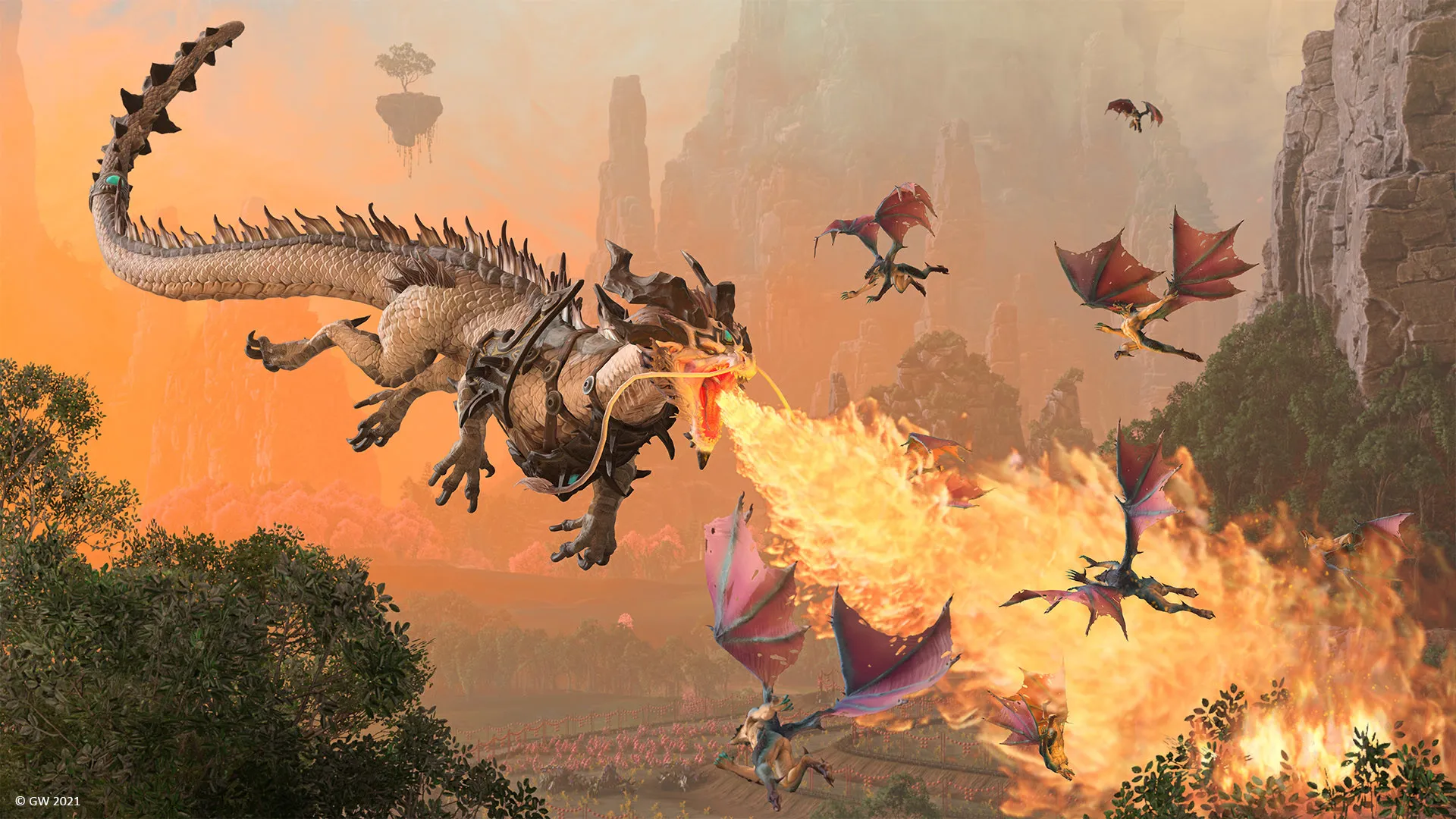
Total War: WARHAMMER III stands as one of Creative Assembly’s most ambitious strategy titles, merging the grand tactical scope of Total War with the dramatic fantasy of Warhammer. Yet beneath its epic battles and iconic factions lies a design challenge that continues to polarize players. The campaign economy. More specifically, the controversial mechanics of supply lines, economic inflation, and the tendency of factions to snowball out of control. These interconnected systems determine how the mid and late game unfold and remain some of the most complex design debates surrounding Warhammer III today. This article examines the roots, effects, and future implications of this ongoing issue.
The Origins of the Supply Lines Mechanic
Supply lines were introduced to balance army spam and prevent players from fielding overwhelming forces too early. The idea was simple. Each additional army increases upkeep across all forces, ensuring that players must think carefully before expanding their military.
Originally intended to encourage thoughtful decision making, the system quickly became controversial. Players found themselves forced into narrow strategies, as the economic penalties often outweighed the strategic benefits of fielding more armies. What was meant to limit reckless expansion instead created a dramatic bottleneck in the early and mid game.

Inflation and the Escalating Cost of Progress
One major issue tied to supply lines is economic inflation. As players expand their territory, upgrade buildings, and unlock technology, income rises. However, the costs of army upkeep and infrastructure often rise even faster.
This creates a persistent tension between growth and sustainability. Some factions with powerful economy buildings like Dwarfs or Cathay can manage inflation gracefully. Others, especially horde or aggressive factions, find themselves falling behind, unable to fund the armies needed to secure their conquests.
As the campaign continues, this inflation curve becomes more dramatic. It often forces players into painful decisions about disbanding units, delaying expansion, or prioritizing defensive over offensive armies.
Snowballing AI and the Mid Game Crisis
AI snowballing is one of the most persistent complaints in Warhammer III. Certain factions such as the Dark Elves, Dwarfs, or Khorne can rapidly dominate vast regions of the map while others linger in stagnation.
This snowball effect is amplified by how the AI ignores or discounts supply lines. While the player is punished for building additional armies, the AI can field more stacks with fewer consequences. As a result, players must navigate an uneven playing field.
Mid game often becomes a crisis point. A single AI faction may occupy half the map with multiple tier five armies, while the player fights to afford a third or fourth army. The strategic challenge is enjoyable for some players but oppressive for others.
Faction Economy Variance and Design Imbalances
Warhammer III features dozens of races with vastly different economies. Some rely on traditional settlement structures, while others depend on raiding, corruption, or unique currency systems. This diversity creates flavor and replayability, but also imbalance.
For example, Skaven thrive through food mechanics and cheap armies, allowing them to circumvent traditional supply constraints. Meanwhile, Kislev or Empire factions struggle with expensive units and slow-building economic structures. This disparity leads to uneven difficulty spikes depending on faction choice.
Players who enjoy thematic playstyles may feel punished for choosing weaker economies, while meta-driven players gravitate toward factions with easier financial stability.
Late Game Armies and the Dilemma of Stack Quality
By the late game, players often gain access to elite units, but high upkeep costs and supply penalties make it difficult to field multiple high-tier armies. This leads to a quality versus quantity dilemma.
Some players opt to run a single elite doomstack, relying on hero buffs and optimized builds. Others attempt to field balanced armies across several fronts but struggle to sustain them due to ongoing inflation and supply lines. This dramatically affects campaign strategy.
The result is an experience where late game should feel empowering yet often becomes a test of economic endurance rather than battlefield mastery.
The Role of Technology and Buildings in Economic Recovery
Technologies and economic buildings offer tools to relieve financial pressure, but not all factions benefit equally. Some have tech trees packed with cost reduction effects or global income buffs. Others receive negligible economic bonuses and must rely on constant expansion or raiding.
This inconsistency further widens the gap between stable and unstable factions. Players may find themselves locked into specific build orders or tech paths just to remain solvent. Long-term economic planning becomes critical, but sometimes at the cost of creative play.
Player Strategies to Survive Supply Line Pressure
Players have developed numerous strategies to work around the economic systems. These include defensive turtling, razor-focused expansion toward high-value provinces, or surgical elimination of enemy power factions.
H3 Common Survival Approaches
- Turtling behind defensible mountains or chokepoints
- Optimizing economy buildings before mass recruitment
- Using heroes aggressively to slow AI snowballing
- Avoiding mid-tier armies and rushing elite units
- Running temporary armies only during active war
These strategies demonstrate how deeply the economy shapes player behavior. Creativity thrives within constraints, but excessive constraints can limit experimentation.
AI Behavior and the Unbalanced Competitive Dynamic
A major concern in Warhammer III is the AI’s unfair economic advantage. While meant to compensate for strategic weaknesses, it often creates unrealistic scenarios where AI factions support too many full stacks with inadequate territory.
This imbalanced dynamic leads to campaigns where the player is constantly reacting rather than planning. Many players argue that the game becomes too chaotic, diminishing the satisfaction of long-term strategic decisions.
Balancing AI behavior without making it too weak remains one of the biggest challenges for Creative Assembly.
Community Response and Modding Solutions
The Total War community is famous for its modding prowess, and economy-related mods are among the most popular. Mods that remove supply lines, reduce AI cheats, or rebalance income sources are widely used.
These community solutions highlight the divide between the developer’s intended design and player preferences. Some players prefer a harder campaign with less freedom. Others want more armies, more action, and fewer economic restrictions.
The modding landscape reflects the wide range of playstyles within the Total War community.
Looking Toward the Future of Campaign Balance
Players continue to hope for further balancing patches that refine supply lines, manage AI snowballing, and smooth out income growth curves. Creative Assembly has already made improvements, but the system remains a work in progress.
Future solutions may include faction-specific supply line rules, dynamic upkeep scaling, or more rewards for controlling valuable chokepoints and landmarks. Warhammer III’s campaign sandbox is enormous, and perfect balance may never be achievable. Yet ongoing iteration can help align the game more closely with the diverse expectations of its fanbase.
Conclusion
The economic systems in Total War: WARHAMMER III are among its most defining and divisive mechanics. Supply lines, inflation, and AI snowballing create layers of strategic depth that challenge both new and veteran players. Yet these same mechanics can feel restrictive, unbalanced, or unfair depending on faction selection and playstyle. While some players enjoy the constant pressure to optimize, others yearn for the freedom to field massive armies without economic punishment.
Despite these challenges, the game’s economic design remains a fascinating case study in large-scale strategy balancing. It continues to evolve through patches, mods, and community feedback, ensuring that the debate over supply lines and snowballing will shape the game’s legacy for years to come.