The Open Road and the Closed Circuit: A Deep Dive into the Forza Franchise
🏁
The Forza franchise stands as one of the most dominant and influential names in modern racing video games. Born from Microsoft’s desire to challenge Sony’s Gran Turismo behemoth, it quickly evolved from a promising simulation-focused title into a two-pronged dynasty: the meticulously accurate Forza Motorsport and the expansive, festival-driven Forza Horizon. What began in 2005 as a single, focused effort has blossomed into a sprawling celebration of car culture, offering unparalleled variety in both driving experience and sheer vehicular content. This comprehensive journey through the series explores its evolution, the core differences between its two pillars, and the enduring legacy that continues to define the genre for millions of players.
🎮 The Genesis: Forza Motorsport (2005-2011)
The original Forza Motorsport, developed by Turn 10 Studios, launched on the original Xbox, establishing the fundamental DNA of the simulation branch. Its goal was clear: to deliver a detailed, realistic, and highly customizable racing experience to a console audience. It was an ambitious debut that laid the groundwork for everything that followed, defining the core mechanics of physics, damage, and customization that would become series staples.
Forza Motorsport 1 & 2: Building the Foundation
The first two installments were crucial for establishing credibility. Forza Motorsport (2005) introduced features like the paint and decal editor, performance damage modeling, and the ability to purchase and tune upgrades—all essential components of the "Car-RPG" structure. The transition to the Xbox 360 with Forza Motorsport 2 (2007) brought significant graphical improvements and a more refined physics engine, making the simulation experience more robust and accessible. These early games were about the pursuit of realistic driving on renowned circuits, cementing the series' position as the premier simulation racer on the Xbox platform.
GamePlatformYearExpert RatingFocusForza MotorsportXbox20058.8/10Simulation, CustomizationForza Motorsport 2Xbox 36020079.0/10Physics Refinement, Online Racing
The Peak of the Simulation Era: Forza Motorsport 3 & 4
Forza Motorsport 3 (2009) and Forza Motorsport 4 (2011) are often cited as the high watermark for the original Motorsport series. They massively expanded the car roster and track selection, while maintaining the deep simulation core. FM3 introduced a number of accessibility features to welcome casual players, a trend that would continue, offering a path from novice to expert. FM4 perfected this formula, introducing the "Autovista" mode—a highly detailed, interactive car showroom—and enhanced online features, all while boasting a truly massive garage of over 500 vehicles. These titles successfully blurred the line between hardcore simulation and accessible console racer.
- Pros: Unparalleled car and track selection (for the era), deep tuning and customization, excellent driving physics, highly accessible controls with assists.
- Cons: Career progression could feel repetitive, the simulation fidelity, while great, was still a step below the most hardcore PC sims.
🌎 The Horizon Revolution: Shifting to Open-World Excellence (2012-2016)
In 2012, the franchise took a bold, genre-defining turn with the introduction of Forza Horizon, a spin-off developed by Playground Games. This new series retained Motorsport's incredible car detail and physics but transplanted the action into a massive, fictionalized open world set around a vibrant music and racing festival. The contrast was stark: the tight, precise lines of a circuit were replaced by the freedom of the open road.
Forza Horizon (2012): The Festival is Born
The first Forza Horizon was set in a fictional version of Colorado, USA. It traded the sterile precision of the racetrack for the dirt, asphalt, and stunning vistas of a sprawling landscape. The physics were tuned to be more "sim-cade"—still grounded in realism but forgiving enough for high-speed, off-track shenanigans. This shift proved instantly popular, attracting a much wider audience who craved the joy of driving with less of the simulation's rigorous discipline. It immediately set a new benchmark for open-world racing.
- Key Innovations:
- Open-World Map (Fictional Colorado).
- Music/Car Culture Festival Setting.
- Mix of on-road, off-road, and point-to-point events.
- "Skill Chain" system rewarding stylish driving.
Horizon 2 & 3: Global Expansion and Graphical Dominance
The sequels refined the formula to near perfection. Forza Horizon 2 (2014) moved the festival to Southern Europe (France and Italy), introducing a seamless open world and the beautiful, dynamic weather of the region. Forza Horizon 3 (2016) relocated to Australia, allowing players to explore diverse biomes—from the Outback to the Surfer's Paradise city—and gave the player control over the festival itself, deepening the "Car-PG" element. These titles consistently showcased stunning, best-in-class graphics, pushing the boundaries of what open-world games could achieve visually.
- Pros (Horizon Series): Unmatched sense of freedom and exploration, diverse car lists, stunning graphics, fun and accessible handling model.
- Cons (Horizon Series): The more arcade-style physics lacked the depth for hardcore sim racers, progression could feel overwhelming due to the sheer volume of content.
🔄 The Mid-Generation Divide and Convergence (2013-2017)
The middle of the Xbox One generation saw both branches of the franchise continue to evolve, often in conflicting ways, highlighting the fundamental divide between them.
Forza Motorsport 5, 6, and 7: The New Sim Standard
The Motorsport series faced a rocky transition to the Xbox One. Forza Motorsport 5 (2013) launched with a reduced car and track list, suffering from the need to build next-gen assets from scratch and initial monetization criticisms. However, Turn 10 quickly recovered. Forza Motorsport 6 (2015) was a triumphant return to form, reintroducing a massive car list and adding crucial elements like dynamic weather and night racing, radically transforming the circuit experience. Forza Motorsport 7 (2017) was the ultimate expression of this era, featuring over 700 vehicles, the most in series history, and dynamic race conditions that demanded skill and adaptability.
- Pros (FM 5-7): Huge content library, incredible graphical fidelity, Drivatar AI system, realistic dynamic weather/track conditions.
- Cons (FM 5-7): Career structure became somewhat generic, focus sometimes seemed to shift away from pure simulation towards spectacle.
The Two Poles of Racing
The success of Horizon caused a fundamental shift in the identity of the entire Forza brand. Motorsport remained the standard for precision driving, but Horizon was quickly becoming the face of the franchise, appealing to the masses with its sheer fun factor. The engines, though shared in technology (ForzaTech), were delivering radically different experiences.
H3. Motorsport: The Discipline of the Track
The focus is on shaving off milliseconds, finding the perfect braking point, and understanding car setup's granular effects on a specific, laser-scanned circuit.
H4. Horizon: The Thrill of Discovery
The focus is on high-speed drifts, massive jumps, and exploring a beautiful, diverse landscape with a massive collection of vehicles for every type of surface.
🇬🇧 Seasons and Spectacle: Forza Horizon 4 & 5 (2018-2021)
The most recent mainline Horizon titles have cemented its place as the genre's open-world king, introducing innovative mechanics that keep the experience fresh and engaging.
Forza Horizon 4: Dynamic Seasons in the UK
Forza Horizon 4 (2018), set in a beautiful, condensed version of Great Britain, introduced the game-changing feature of Dynamic Seasons. The entire map changed weekly, with Spring, Summer, Autumn, and Winter radically altering the terrain, vehicle handling, and available events. This not only provided continuous visual variety but also required players to constantly adapt their vehicle choices and driving styles, adding immense depth to the sandbox.
Forza Horizon 5: The Mexican Masterpiece
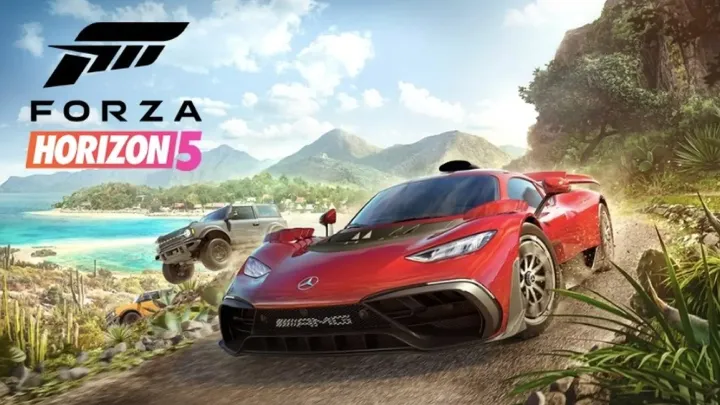
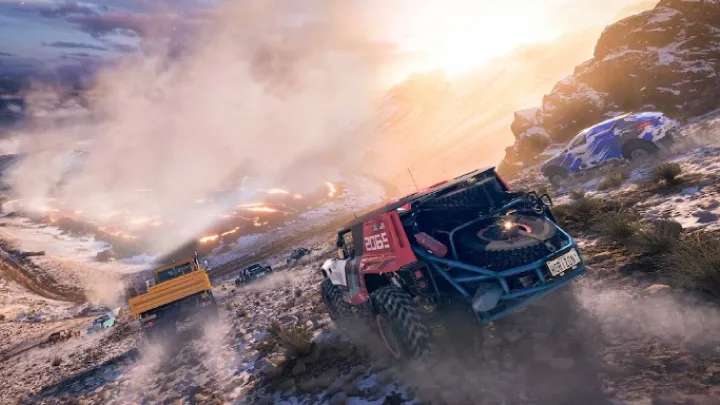
Forza Horizon 5 (2021) took the festival to Mexico, offering the most geographically diverse and visually stunning map in the series to date. From sandy deserts and dense jungles to snow-capped volcanoes and vibrant cities, the environment was a character in itself. FH5 improved on the living world concept with stunning graphical fidelity and a revised progression system that gave players more control over their adventure.
- Rating: 9.5/10 (Horizon 5)
- Pros: World-class visuals (especially on next-gen), incredibly diverse and large map, refined car handling, massive amount of content via EventLab and user-created races.
- Cons: The "story" and character dialogue are often considered weak, the map can feel overly saturated with icons for some players.
🏁 The Motorsport Reboot: Forza Motorsport (2023)
After a six-year hiatus, the Motorsport series returned in 2023 not as a direct sequel to FM7, but as a full reboot. Developed "from the ground up" by Turn 10, this title aimed to re-establish the core simulation experience on the Xbox Series X/S and PC.
Back to Basics, But with Modern Tech
The 2023 Forza Motorsport focused intensely on the core physics simulation. It introduced a completely revamped tire and suspension model, advanced real-time ray tracing for improved lighting and reflections, and a much heavier emphasis on tire wear, fuel management, and race strategy. The car count was reduced from FM7’s peak, but the quality of each model and the detail of the laser-scanned tracks were dramatically increased.
FeatureRebooted FM (2023)Older FM (e.g., FM7)Physics ModelNew, highly detailed tire and suspension simulation.Older, less granular simulation model.VisualsFocus on ray-traced global illumination, new damage model.Traditional rasterization lighting model.CareerStructured around car-building and practice laps for mastery.Traditional, linear race series progression.
The Reboot's Mixed Reception
While praised for its sublime handling and graphical showcase, the reboot had a somewhat mixed launch reception.
- Pros: Fantastic, challenging, and rewarding driving physics (the best in the series), stunning visuals, excellent accessibility options for all skill levels.
- Cons: Content felt sparse at launch compared to previous entries (less cars, less tracks), a repetitive and sometimes unengaging single-player career structure, and initial technical issues on PC.
🔧 The Technological Engine: ForzaTech
Both Motorsport and Horizon are built upon the proprietary ForzaTech engine, which serves as the technological backbone of the entire franchise. This shared foundation is the secret to the series' consistent high quality and stunning visual fidelity.
A Unified Platform for Car Culture
ForzaTech allows both Turn 10 (Motorsport) and Playground Games (Horizon) to share core assets, particularly the highly detailed car models and the physics foundation. While Playground Games then tweaks the physics for a more arcade-friendly feel, the underlying data—from suspension geometry to engine power curves—originates from the same place. This collaborative approach ensures that the fundamental feel of each car is authentic, regardless of whether you're cornering on the Nürburgring or drifting through a Mexican jungle.
The Physics and Visual Edge
The constant refinement of ForzaTech has allowed the series to consistently push graphical boundaries, particularly in:
- Car Detailing: The level of detail on vehicle models, both external and internal (Forzavista), remains industry-leading.
- Rendering and Lighting: The move to advanced rendering techniques, especially in the 2023 Motorsport reboot, has delivered truly photorealistic environments and dynamic lighting effects.
🎨 Beyond the Race: Customization, Community, and Car-RPG
The Forza experience is about more than just driving; it is about ownership, creativity, and sharing. This "Car-RPG" element—where players earn, upgrade, and personalize hundreds of vehicles—is what sets Forza apart.
The Three Pillars of Customization
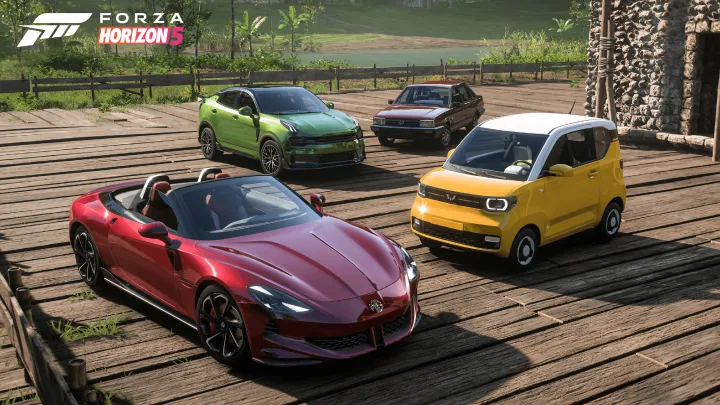
The franchise has perfected a three-part customization loop that keeps players invested:
- Performance Tuning: A deep, physics-based system allowing players to adjust everything from gear ratios and differential locking to brake pressure and suspension stiffness. This ensures that every car can be tailored to a specific track or driving style.
- Aesthetic Customization (The Livery Editor): The powerful in-game tool that allows players to create incredibly complex and detailed custom liveries (paint jobs and decals). The community sharing of these designs has become a massive, self-sustaining part of the franchise's ecosystem.
- Upgrades and Conversions: Players can radically alter their cars, swapping engines, drivetrains, and body kits. This allows a humble hatchback to be transformed into a race-winning monster, encouraging experimentation.
The Power of the Community
Forza has always fostered a strong sense of community, mainly driven by user-generated content (UGC).
- Shared Content: Players can share their custom liveries, performance tunes, and even custom race blueprints (EventLab in Horizon).
- Rivals Mode: This system integrates friends' best lap times directly into the single-player experience as ghost cars, creating a constant, engaging competition.
⚖️ Forza Motorsport vs. Forza Horizon: A Head-to-Head
The existence of two distinct branches serves the entire racing game spectrum, ensuring that no potential fan is left behind. They are fundamentally different beasts, targeting different player desires.
FeatureForza MotorsportForza HorizonSettingClosed, laser-scanned real-world race circuits (e.g., Spa, Laguna Seca).Large, open-world fictionalized landscapes (e.g., Mexico, UK).Physics StyleSimulation/Sim-Cade, focused on precision, braking, and tire management.Sim-Cade/Arcade, focused on accessibility, speed, and fun.Core GoalWinning races, shaving lap times, mastering track limits.Exploration, collecting cars, performing stunts, participating in the festival.ProgressionUsually structured career series, often restricted by car class (Homologation).Open-ended 'Adventures,' progressing the festival, focusing on player choice.DeveloperTurn 10 StudiosPlayground Games
The Simulation Requirement
For serious simulation enthusiasts, Motorsport offers the most authentic and challenging experience, but Horizon still provides enough depth through its tuning system to satisfy those who want realistic handling without the rigidity of the track. Ultimately, the two series form a symbiotic relationship, driving the overall quality and reach of the Forza brand.
📈 The Enduring Impact on the Racing Genre
The Forza franchise has not only survived but thrived, setting new standards that competitors have been forced to follow.
Redefining Console Simulation
In the early 2000s, Gran Turismo held a virtual monopoly on console simulation racing. Forza Motorsport successfully broke this dominance by offering a compelling alternative that emphasized car modification, detailed damage modeling, and superior online integration from the start. The constant pressure between the two titans has driven innovation in both camps.
Setting the Open-World Standard
The true revolutionary impact lies with Forza Horizon. Its blend of stunning open-world design, a massive car roster, and accessible yet nuanced driving physics created the blueprint for the modern open-world racer. The introduction of dynamic seasons and a constantly evolving event structure has made it the undisputed benchmark for the genre. Games like Need for Speed and The Crew have inevitably taken cues from Horizon's success in combining freedom with structure.
🔮 The Road Ahead: What's Next for Forza
The future of the Forza brand is now intrinsically linked to the post-reboot strategy of Motorsport and the continued evolution of Horizon.
Continuing the Live-Service Evolution
The 2023 Forza Motorsport was positioned as a live-service platform, designed to be updated and expanded for years, much like its competitor Gran Turismo 7. This suggests a shift away from a biennial release schedule for Motorsport and towards continuous content drops, including new cars, tracks, and career events. The success of this model will determine the long-term viability of the track-based simulation.
The Anticipation for Horizon 6
Given the alternating release cycle and the immense popularity of the open-world format, the focus is already shifting to the eventual announcement of Forza Horizon 6. Speculation is rampant on the next global location, with perennial fan favourites like Japan, Germany, and regions of South America being hotly debated. Playground Games is expected to push the graphical and social capabilities of the Horizon blueprint even further.
- Expected Focus for Future Titles:
- Greater integration of Ray Tracing for visual realism.
- Deeper user-generated content tools (EventLab expansion).
- Enhanced multiplayer and social interactions within the open world.
- Continued expansion of accessibility features (a strength of the 2023 Motorsport).
🏆 Conclusion: The Unstoppable Force
The Forza franchise, in its duality, has achieved what few racing series have: it caters with equal mastery to both the hardcore simulation enthusiast and the casual, joy-seeking open-world driver. Turn 10 Studios and Playground Games have successfully built a universe that is both deeply reverent of automotive history and wildly imaginative in its execution. From the precise apexes of the latest Forza Motorsport reboot to the breathtaking vistas of Forza Horizon 5, the series offers an unparalleled sandbox for car culture. It’s a force that continues to accelerate, leaving a trail of innovation and excellence that sets the pace for the entire genre. The two flags of Motorsport and Horizon fly high, guaranteeing that for any kind of racing fan, the perfect drive is always within reach.