

1. Introduction to Total War: WARHAMMER III
Total War: WARHAMMER III stands as the monumental conclusion to Creative Assembly’s epic trilogy, merging the grand strategy of Total War with the dark fantasy universe of Warhammer. More than just a sequel, this game represents a massive escalation in scale, ambition, and depth. With entirely new factions, dramatic campaign mechanics, extensive unit rosters, and a narrative that pushes players into the heart of Chaos itself, the game aims to deliver the ultimate Warhammer experience.
From the opening cinematic to the final battle in the Realm of Chaos, the game places players at the center of a sprawling conflict involving empires, daemons, and gods. Whether you command the disciplined armies of Cathay, the ice-imbued warriors of Kislev, or one of the terrifying Chaos factions, the journey is filled with strategic dilemmas, moral choices, and explosive real-time battles.
In this review, we’ll explore the game across ten major themes — story, factions, campaign gameplay, battles, mechanics, graphics, performance, and overall experience — following the same detailed format you previously requested.

2. Story and Narrative Structure
The narrative of WARHAMMER III revolves around the dying roar of the bear-god Ursun, an event so powerful it tears open portals into the Realm of Chaos. These rifts become the foundation of the entire campaign, drawing all races into a desperate struggle either to save the god or exploit his power.
The story unfolds in a darker and more mature direction compared to earlier entries. The opening captures the hopelessness of Kislev and the desperation of Cathay, each fighting on multiple fronts. Unlike previous titles, the narrative isn’t just a backdrop — it actively shapes gameplay. Chaos corruption spreads, factions battle for soul fragments from the Chaos Realms, and your decisions determine how the conflict progresses.
Each faction has its own perspective:
- Kislev sees Ursun as the heart of their culture.
- Cathay views the Chaos rifts as an existential threat requiring celestial intervention.
- The Chaos factions view Ursun as a tool for ascension.
This multi-layered narrative design gives every campaign a distinct flavor, ensuring no two playthroughs feel alike.
3. Campaign Map and Strategic Depth
The turn-based campaign map is larger and more detailed than anything in the series so far. Regions vary dramatically: icy tundra, desert wastelands, lush Cathayan landscapes, demonic wastelands, and corrupted Chaos territory. Each area has unique terrain, resources, climates, and strategic challenges.
What makes the campaign engaging is how dynamic it feels. The world constantly shifts due to corruption, rifts, diplomacy changes, invasions, and scripted events. You must expand your empire, defend key provinces, negotiate treaties, and prepare for sudden incursions.
Mechanics that define the campaign:
- Province management: balancing growth, income, corruption control, and defenses.
- Army movement: terrain penalties, attrition, and strategic choke points.
- Corruption: a major theme, forcing players to plan where and how they expand.
- Rifts: unpredictable threats that can tear entire regions apart if ignored.
Overall, the campaign combines long-term planning with reactive decision-making, one of the strongest blends in the Total War series.
4. Faction Diversity and Unique Mechanics
WARHAMMER III includes the most varied faction lineup in the trilogy. Each faction plays dramatically differently, offering unique mechanics, units, and story progression.
Kislev
A hybrid army that mixes melee, ranged, cavalry, and icy magic. Their devotion mechanic, Atamans, and Ice Court create a rich empire-building experience. Kislev rewards adaptable gameplay and balanced armies.
Grand Cathay
A defensive powerhouse with Harmony, caravans, and Great Bastion management. Their units emphasize formations, synergy, and stability. Cathay’s campaign involves protecting the empire while sending caravans across dangerous lands for massive gold rewards.
Khorne
The god of bloodshed. No magic, no subtlety. Pure melee dominance. Khorne’s armies grow stronger through constant warfare, gaining bonuses and currency (Skulls) by defeating enemies.
Tzeentch
A faction based on manipulation, magic, and destiny. The Changing of the Ways mechanic allows diplomatic trickery like stealing settlements or initiating wars. Their campaign focuses on spellcasting supremacy and long-term planning.
Nurgle
A slow but relentless faction focused on attrition, regeneration, and spreading plague. Their cyclical building system is entirely unique — structures evolve automatically through phases, requiring a completely different economic mindset.
Slaanesh
Fast, seductive, and tactical. Slaanesh excels at battlefield control, debuffs, and luring enemies into traps. Their seduction mechanic enables stealing units before battles, giving them unusual flexibility.
Ogre Kingdoms
A monstrous faction with brutal melee units and a unique meat economy. Ogres are fast, deadly, and require constant feeding to maintain strength. Their campaign style emphasizes mobility and opportunistic expansion.
This diversity ensures exceptional replay value and a unique learning curve for each faction.
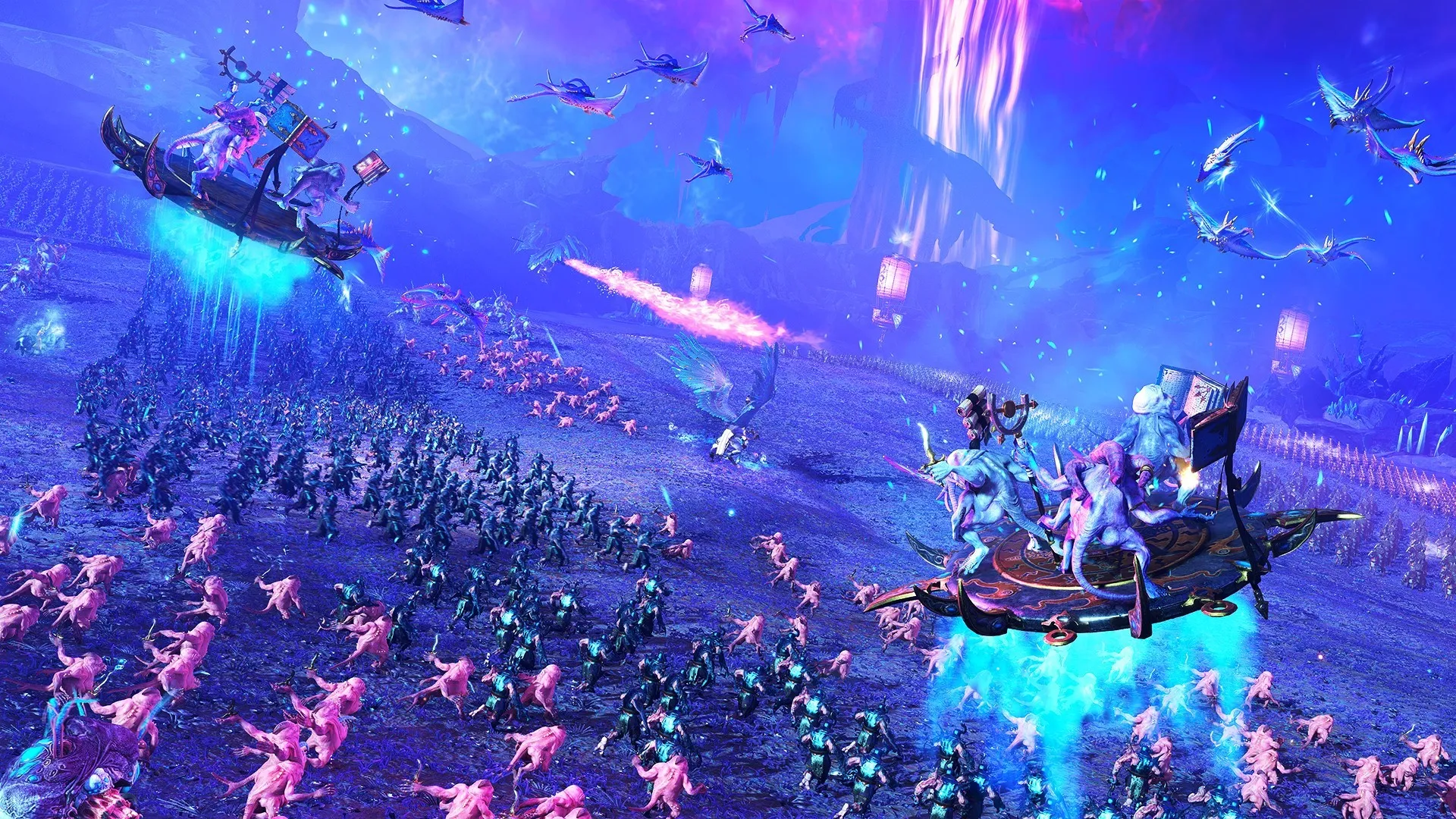
5. Realm of Chaos Campaign Mechanics
The Realm of Chaos is the central structure of the game’s campaign. At intervals, rifts open across the map, granting access to each Chaos god’s domain. To reach the final showdown, players must conquer trials inside four realms and collect the souls of their champions.
Each realm introduces unique challenges:
- Khorne’s Realm: nonstop combat to climb the Blood God’s ladder.
- Tzeentch’s Realm: labyrinthine challenges and shifting routes.
- Nurgle’s Realm: survival against massive attrition and plague.
- Slaanesh’s Realm: tempting rewards that require resisting corruption.
These realms add intensity but can also disrupt campaign flow. They create tension but force players into time-sensitive missions. Love it or hate it, the system pushes you toward decisive actions.
6. Real-Time Battles and Tactical Complexity
Battles in WARHAMMER III are bigger, more dramatic, and more chaotic than ever. With improved animations, better AI, and more dynamic environments, every fight feels cinematic.
Unit Interactions
The game features deep tactical layers:
- flanking bonuses
- leadership and morale
- armor and armor-piercing dynamics
- magic, wind spells, and area effects
- flying units and artillery
- monstrous infantry and single entities
Factions like Tzeentch excel at ranged destruction, while Kislev dominates hybrid warfare. Nurgle thrives in drawn-out battles, and Khorne overwhelms with brute force.
Siege Battles
Sieges are reworked with:
- multi-level walls
- barricades
- capture points
- defensive structures
They are more dynamic and require strategic planning, not just brute force.
Survival Battles
A new feature combining RTS and tower defense elements. Players must:
- capture points
- build reinforcements
- survive waves of enemies
These battles deliver some of the most epic moments in the entire franchise.
7. Economy, Growth, and Empire Management
Each faction has a distinct economic model, meaning empire management requires a tailored approach.
Building Trees
Some factions develop buildings normally (Kislev, Cathay), while others use unique systems:
- Nurgle’s growth cycles
- Ogre’s Meat resource
- Tzeentch’s grimoires and manipulation
Corruption Management
Chaos corruption spreads aggressively and affects income, public order, and growth. Cleansing or controlling corruption becomes essential, especially for non-Chaos factions.
Trade and Diplomacy
Cathay gains huge income from caravans, while Kislev relies on devotion and political appointments. Chaos factions generate wealth through razing and conquest.
The diversity in building strategies adds long-term strategic depth.
8. Diplomacy, Alliances, and AI Behavior
Diplomacy is more advanced and meaningful than in previous games.
Outposts
You can build outposts in allied settlements, allowing you to recruit their units. This leads to creative army builds, such as combining Cathay artillery with Kislev cavalry or even adding massive Ogre units to a human army.
Improved AI Logic
AI factions:
- pursue realistic alliances
- value strategic positioning
- respond to corruption
- coordinate better during wars
Diplomacy matters more, especially for survival on higher difficulties.

9. Graphics, Audio, and Performance
The game is visually stunning. Each faction features detailed unit models, atmospheric environments, and jaw-dropping magic effects. The Chaos Realms, in particular, showcase some of the series’ most imaginative visuals.
Graphics Quality
- High-resolution textures
- Improved lighting and shadows
- Massive particle effects
Audio
Epic music themes change depending on factions. Daemons whisper in battle, Cathay’s orchestration blends Chinese instruments, and Kislev sounds like cold winds and war horns.
Performance
The game is demanding, especially during large battles or on high settings. Patch updates have improved stability, but lower-end machines may need careful optimization.
10. Final Verdict
Total War: WARHAMMER III is not just a conclusion — it’s the definitive evolution of everything the trilogy promised. With massive battles, deep strategy, complex faction mechanics, and a narrative that pushes players into the heart of chaos, the game stands as one of the greatest strategy titles of its generation.
The diversity of gameplay ensures endless replayability. Each campaign tells a different story, shaped by faction mechanics, chaos influence, diplomacy, and your personal choices. Whether you enjoy grand empire management or thrilling real-time battles, WARHAMMER III delivers an experience unmatched in scale and ambition.
For fans of Total War, fantasy strategy, or dark storytelling, this game is a must-play and one of the most content-rich strategy games ever made.